

Vietnamese Coffee: RTD & Private Label Options | DATAFA


Vietnamese Coffee: From Highland Roots to RTD and Private Label Products
A coffee’s story begins long before the can opens. It starts with the growing environment, continues through harvesting and processing, and takes shape through roasting, extraction, and formulation.
Vietnam’s Central Highlands provide an important setting for that story. Their basalt-derived soils support extensive Robusta cultivation, connecting the region closely with Vietnam’s coffee identity. Yet origin is only the beginning: the finished drinking experience also depends on how the coffee is processed and prepared.
For beverage brands, importers, and distributors, the opportunity is to translate that identity into products that fit everyday habits.
DATAFA’s coffee portfolio brings together ready-to-drink coffee and freeze-dried formats, offering different starting points for distribution and private-label development.

Vietnam’s Coffee Origins: A Story Worth Telling Accurately
Red earth. Coffee-growing landscapes. Harvested cherries becoming roasted beans. These images give Vietnamese coffee a distinctive visual identity and help buyers understand the agricultural background behind the product.
However, a meaningful origin story should be specific.
A country of manufacture, a bean’s growing region, and a product’s roasting or processing location describe different parts of the supply chain. When developing a coffee brand, these details should be established before they appear on packaging or in marketing.
For an origin-led project, useful questions include:
- Where are the beans grown?
- Which coffee varieties are used?
- Is the recipe based on one variety or a blend?
- What sourcing information supports the proposed origin statement?
This turns a broad story about Vietnamese coffee into a product story that a brand can explain with confidence.
From Coffee Beans to a Defined Flavor Profile
The next step is deciding what the consumer should experience.
Should the first sip emphasize roasted coffee notes? Should the finish feel lighter? Is the product intended for black-coffee drinkers or consumers who prefer a milk-coffee style?
These choices guide development more effectively than a general request for “premium coffee.”
For a private-label coffee project, the sensory brief can define:
| Sensory element | What to establish |
|---|---|
| Aroma | The intended intensity and character of the coffee aroma |
| Roast character | The preferred balance of roasted notes |
| Bitterness and acidity | How pronounced each should feel in the finished drink |
| Sweetness | The desired level, evaluated in the complete recipe |
| Mouthfeel | A lighter drinking experience or a fuller texture |
| Finish | The flavor and sensation remaining after each sip |
Samples then provide the basis for comparing options. The approved sample and specification should describe the same product that will be manufactured.
DATAFA Ready-to-Drink Coffee: Coffee for the Moment
Ready-to-drink coffee removes the preparation step. The product is already formulated and packaged for consumption according to its label instructions.
Within the supplied eDay product materials, two main directions stand out: black coffee and milk coffee or latte-style drinks.
Black Coffee and Americano-Style Products
For consumers who prefer a coffee-focused experience, black coffee provides a clear product direction.
The eDay materials feature Black Coffee and Origin Americano presentations. These offer a starting point for discussing a canned coffee range built around coffee aroma, roast character, and drinking strength.
For buyers, the key is to define the finished recipe behind the name. An Americano-style presentation alone does not establish bean origin, extraction method, sugar content, or caffeine level.
Those details should be confirmed through the specification for the selected product.
Milk Coffee and Soft Latte-Style Products
Milk coffee takes the drinking experience in another direction, bringing coffee character together with a softer, creamier sensory profile.
The supplied eDay materials include Milk Coffee and Soft Latte presentations. These can support discussions about a range aimed at consumers who enjoy coffee with a rounded mouthfeel and a gentler flavor balance.
Development should establish the actual milk or creamer ingredients, sweetness, allergen information, and desired coffee intensity. The name and artwork should then reflect the approved formulation.
For a buyer building a portfolio, black coffee and latte-style coffee can serve different preferences while sharing a coordinated brand identity.
DATAFA Freeze-Dried Coffee: A Different Way to Enjoy Coffee
A jar of freeze-dried coffee serves a different occasion from a ready-to-drink can. It allows the user to prepare a cup and adjust the serving according to the product’s instructions.
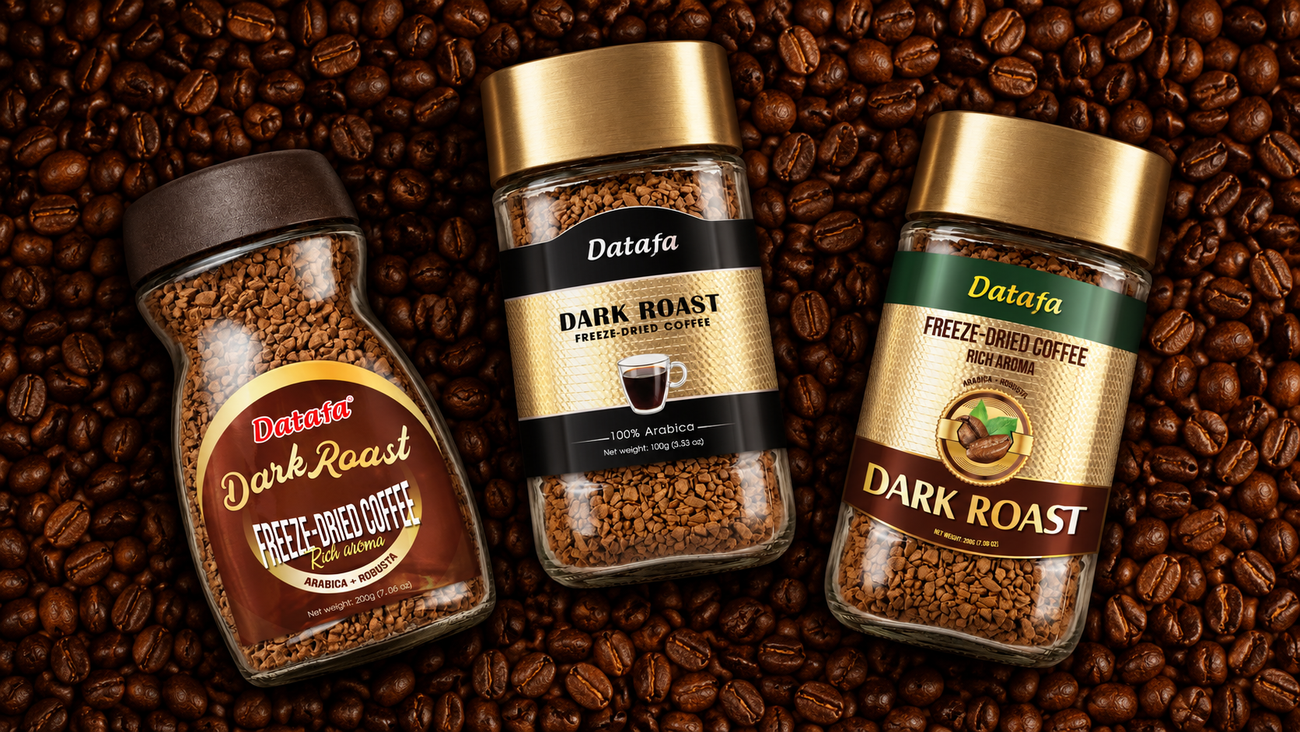
DATAFA’s published range includes two relevant options:
- 100% Arabica Freeze-Dried Coffee — 100g jar
- Dark Roast Freeze-Dried Coffee Blend — 200g jar, described as an Arabica and Robusta blend. Datafa Co., Ltd
These provide distinct starting points for a private-label instant coffee range.
A brand may choose to emphasize a clearly defined coffee composition, a dark-roast identity, or the convenience of preparing coffee at home or at work. Each direction should be supported by the selected product’s ingredient declaration and specifications.
For commercial planning, buyers should also consider serving instructions, jar size, closure, storage requirements, and the overall presentation on shelf.
Canned Coffee or Freeze-Dried Coffee: Which Fits Your Range?
Choosing a coffee format begins with the intended use occasion and sales channel.
| Product direction | Consumer occasion | Buyer considerations |
|---|---|---|
| RTD black coffee | A prepared coffee drink for everyday convenience | Coffee intensity, recipe, can size, storage instructions |
| RTD milk coffee or latte | A prepared drink with a softer coffee profile | Milk or creamer ingredients, sweetness, allergens, texture |
| Freeze-dried coffee | Coffee prepared by the consumer at home or at work | Coffee composition, serving instructions, jar size, closure |
A coordinated range can include more than one format. The important step is to give each product a clear role, with its own taste target, packaging, and consumer occasion.
RTD describes the product’s prepared format; storage conditions and shelf life must still be confirmed for the individual SKU.

Private Label Coffee with DATAFA: What to Discuss First
DATAFA’s published coffee product pages describe OEM/ODM and private-label services covering formulation and R&D, custom branding and packaging, manufacturing, and quality control. Project scope and available options should be agreed for the selected product. Datafa Co., Ltd
To begin a useful discussion, prepare a short brief covering the following points.
1. Target Market and Sales Channel
Identify the country of sale and intended channel, such as retail, convenience stores, e-commerce, or foodservice.
This gives the project a commercial context and helps determine what product information and packaging review will be needed.
2. Coffee Format and Taste Target
Specify whether you are interested in canned black coffee, a milk-coffee style, or freeze-dried coffee.
Include reference samples or describe the desired aroma, sweetness, coffee strength, and mouthfeel.
3. Packaging Requirements
Share the preferred pack size, visual direction, and secondary packaging needs.
The supplied materials show several can and jar presentations. Final capacities, case quantities, and artwork should be confirmed against the current commercial specification rather than selected from imagery alone.
4. Order Volume and Launch Schedule
Provide an estimated opening order and intended launch window.
Request confirmation of MOQ, sampling arrangements, production lead time, and quotation terms for the chosen formulation and packaging.
5. Product Information and Claims
Agree on the ingredient list, allergen declaration, nutrition information, storage instructions, and supporting documents.
Claims about protein, sugar, coffee composition, or origin should be checked against the approved product information before artwork is finalized.
Build a Coffee Range with a Clear Identity
Vietnamese coffee offers a compelling starting point: a recognizable coffee culture, a strong agricultural story, and opportunities to present coffee in different everyday formats.
A successful product connects that story with a defined taste and a practical pack. From black coffee and soft latte-style drinks to freeze-dried coffee, each format gives a brand a different way to reach its customers.
Planning your next coffee product? Contact DATAFA with your target market, preferred format, pack size, and estimated order volume. Request current specifications and samples, then discuss formulation, packaging, MOQ, and an OEM/ODM quotation.
Frequently Asked Questions
1. What is ready-to-drink coffee?
Ready-to-drink coffee is a prepared coffee beverage that does not require brewing or mixing before consumption. Follow the storage and serving instructions for the specific product.
2. What coffee products can I discuss with DATAFA?
The materials presented here include canned black coffee, Americano-style coffee, milk coffee, soft latte-style drinks, and freeze-dried coffee. Contact DATAFA to confirm the current range and commercial specifications.
3. Does DATAFA offer private-label coffee services?
DATAFA’s published coffee pages list private-label and OEM/ODM services, including formulation development and custom packaging. The available scope should be confirmed for each project.
4. Does Vietnamese coffee always mean coffee from the Central Highlands?
A specific growing-region claim needs sourcing evidence. Confirm the origin of the beans used in the selected product before making that statement.
5. What information should I send to request a quotation?
Share your target market, coffee style, preferred packaging, estimated quantity, and launch schedule. Include any formulation requirements so DATAFA can assess the project and propose relevant options.