

Tetra Pak vs Bottled Beverages: Which Packaging Is Right for Your Drink?


Tetra Pak vs Bottled Beverages: Which Packaging Is Right for Your Drink? (tetra pak beverage packaging aseptic beverage packaging)
Introduction
In today’s competitive beverage industry, packaging plays a crucial role beyond simple containment-it directly influences product quality, shelf life, branding, and consumer perception.
As demand grows for ready-to-drink beverages across global markets, brands must carefully evaluate their packaging strategy to stay competitive.
Among the most common solutions, tetra pak beverage packaging and bottled beverages represent two distinct approaches. While both formats are widely used, they serve different product categories and business goals.
Understanding the strengths and limitations of each option is essential for brands aiming to build scalable, market-driven beverage products.

Make smarter choices for better products.
What Is Tetra Pak Beverage Packaging?
Tetra pak beverage packaging is a form of aseptic beverage packaging designed to preserve liquid products without refrigeration before opening.
Key characteristics:
- Multi-layer structure (paperboard, aluminum, plastic)
- Protection against light, oxygen, and bacteria
- Long shelf life without preservatives
- No cold chain required
Common applications:
- Dairy and plant-based milk
- Fruit juices
- Functional health beverages
Scientific foundation
Aseptic processing combines ultra-high temperature (UHT) treatment with sterile packaging, allowing products to remain safe and stable over extended periods, according to food safety standards.
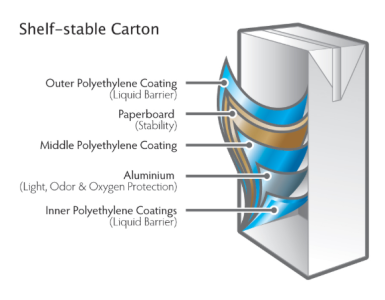
Structure of tetra pak beverage packaging showing multi-layer aseptic carton design.
What Are Bottled Beverages?
Bottled beverages include drinks packaged in PET bottles, glass bottles, or aluminum cans, offering flexibility across various beverage categories.
Energy drinks, one of the fastest-growing bottled beverage categories, rely heavily on packaging for branding and consumer appeal.
To better understand this category, read our guide on energy drink formulation and market trends in The Science of Energy Drinks: 2026 Superior Guide & Trends.
Key characteristics:
- Highly customizable design and shape
- Suitable for carbonated and non-carbonated drinks
- Strong shelf visibility and branding potential
- Compatible with diverse production systems
Common applications:
- Carbonated soft drinks
- Energy drinks
- Bottled water
- Ready-to-drink tea and coffee
Unlike aseptic cartons, bottled beverages are designed not only for function-but also for consumer engagement and brand differentiation.

Variety of bottled beverages including soda, energy drinks, and carbonated soft drinks in PET bottles and cans
Tetra Pak vs Bottled Beverages: 7 Key Differences
| Factor | Tetra Pak Beverage Packaging | Bottled Beverages |
|---|---|---|
| Shelf life | Long (6–12 months) | Moderate |
| Preservation | No preservatives | Flexible options |
| Storage | No refrigeration | May require cold chain |
| Branding | Limited | Highly flexible |
| Product compatibility | Limited categories | Wide range |
| Consumer appeal | Functional | Visual & lifestyle-driven |
| Market usage | Niche segments | Dominant globally |
Key takeaway
While tetra pak packaging is effective for specific use cases, bottled beverages offer greater flexibility, stronger branding potential, and broader market applicability, making them the preferred choice for most beverage brands.
Limitations of Tetra Pak Packaging
Despite its advantages, tetra pak packaging presents several limitations:
- Limited flexibility in shape and design
- Lower visual impact on retail shelves
- Not suitable for carbonated beverages
- Less effective for lifestyle-oriented branding
As consumer purchasing decisions are increasingly influenced by visual appeal and brand identity, these limitations can restrict market competitiveness.
Why Bottled Beverages Dominate the Market
Bottled beverages continue to lead the global beverage industry due to their versatility and alignment with modern consumer behavior.
1. Strong Branding & Shelf Impact
Bottle design plays a key role in attracting attention and building brand identity. Unique shapes, colors, and materials help products stand out in competitive retail environments.
2. Wide Product Compatibility
Bottled formats support:
- Carbonated drinks
- Functional beverages
- Energy drinks
- Premium and lifestyle products
3. Consumer Convenience
Bottled beverages are:
- Portable
- Easy to reseal
- Suitable for on-the-go consumption
4. Market Versatility
From mass-market soft drinks to premium beverages, bottled packaging adapts to multiple pricing and branding strategies.
Global Market Overview
The global beverage packaging market continues to expand, with bottled formats maintaining a dominant share.
According to industry data from Grand View Research, the market shows strong growth across key materials such as plastic, glass, metal, and carton packaging.
Key drivers include:
- High demand for convenience products
- Growth of energy and functional beverages
- Expansion of retail and distribution channels
At the same time, data from Grand View Research also indicates that aseptic beverage packaging is growing steadily in niche segments such as dairy and health-focused drinks.
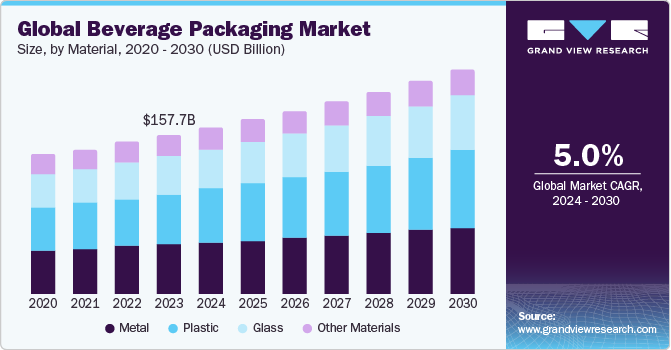
Global beverage packaging market by material, highlighting growth of plastic, glass, metal, and carton packaging segments
Key Trends Shaping Packaging Decisions
1. Rise of Functional & Lifestyle Beverages
Consumers are increasingly choosing beverages based on function and brand identity—areas where bottled packaging excels.
This shift is largely driven by the rapid growth of functional drinks, which are reshaping product development and packaging strategies across the industry. For deeper insights, explore our article on functional beverage market trends in How Functional Drinks Are Reshaping the Beverage Industry.
2. Premiumization & Branding
Packaging is becoming a core part of the product experience, especially in:
- Energy drinks
- RTD coffee
- Premium water
3. Sustainability Considerations
While both formats face sustainability challenges, innovations in recyclable PET and lightweight packaging are improving bottled beverage sustainability.
4. Growth in Asia-Pacific
Emerging markets are driving demand for:
- Affordable bottled beverages
- Convenient, ready-to-drink formats
Strategic Implications for Beverage Brands
Choosing the right packaging depends on your product and market goals.
Tetra Pak may be suitable if:
- You produce dairy or juice products
- You require long shelf life without refrigeration
However, bottled beverages are the better choice if:
- You want strong branding and shelf visibility
- You produce carbonated or energy drinks
- You target modern, lifestyle-driven consumers
- You aim to scale across multiple markets
How Packaging Design Drives Product Success
In today’s market, packaging is not just functional-it is a key marketing tool.
Bottled beverages allow brands to:
- Create unique visual identities
- Enhance consumer experience
- Build stronger brand recognition
For brands competing in crowded markets, achieving this level of differentiation often requires more than in-house capabilities.
Working with an experienced beverage packaging partner can help transform design concepts into scalable, market-ready products.
How the Right Partner Enhances Your Packaging Strategy
As beverage markets become increasingly competitive, choosing the right packaging is only part of the equation. Execution-ranging from design to production-plays a critical role in determining product success.
For brands focusing on bottled beverages, packaging design is not just about appearance. It directly impacts:
- Shelf visibility
- Consumer perception
- Brand differentiation
This is where working with an experienced partner becomes essential.
For brands exploring scalable production, understanding different manufacturing models is also important. Learn more about OEM and ODM beverage production in ODM for Beverages: A Comprehensive Guide.
Companies like Datafa support beverage brands by:
- Developing customized bottled beverage designs aligned with brand identity
- Optimizing packaging for both functionality and visual impact
- Ensuring compatibility with production and filling systems
- Supporting scalability from concept to mass production
With the right partner, brands can transform packaging from a functional necessity into a powerful competitive advantage.
Conclusion
The comparison between tetra pak beverage packaging and bottled beverages reveals a clear insight:
While tetra pak packaging serves specific functional needs, bottled beverages remain the most versatile and commercially effective packaging solution in the global market.
With advantages in:
- Branding
- Product compatibility
- Consumer appeal
Bottled packaging continues to be the preferred choice for beverage brands aiming for growth and market impact.
Ultimately, the right packaging decision is not just about preservation-but about creating products that connect with consumers and stand out in the market.
Watch us on Youtube: Youtube: @DatafaBeverage
Keep updated on our lastest products: Alibaba site: DATAFA
Contact now: Contact site
Related post: The Science of Energy Drinks: 2026 Superior Guide & Trends