

Low-Sugar Beverages: What Brands Should Know Before Starting an OEM/ODM Project

Developing low-sugar beverages starts with a clear product brief. Brands need to decide how much sugar the finished drink should contain, what taste consumers will expect, and which market the product will enter.
These decisions are closely connected. Reducing sugar can change the drinking experience, while the intended sales market affects the claims a brand can use on its label. For businesses planning an OEM or ODM project with DATAFA, defining these requirements early gives product discussions a practical starting point.
This guide explains what low-sugar positioning means, the formulation questions worth asking, and how to prepare a beverage development brief.

What Does “Low-Sugar” Mean for Beverages?
“Low-sugar” describes sugar content, but its use as a label claim depends on the destination market. A claim accepted in one country should not automatically be carried over to another.
For example, the European Union permits a “low sugars” claim for liquids containing no more than 2.5 grams of sugars per 100ml. A “sugars-free” claim has a different threshold: no more than 0.5 grams per 100ml. These are separate claims with separate conditions.
The United States takes a different approach. The FDA does not define “low sugar” as an authorized nutrient content claim. Brands targeting the US therefore need to review their proposed wording against applicable labeling requirements instead of adopting an EU-style threshold.
For an OEM/ODM project, the first question should be specific:
What sugar level should the finished beverage achieve, and what wording is appropriate for its intended market?
Low-Sugar, Reduced-Sugar and No Added Sugar: The Differences
These terms answer different questions about a product.
| Term | Main question it answers | What brands should check |
|---|---|---|
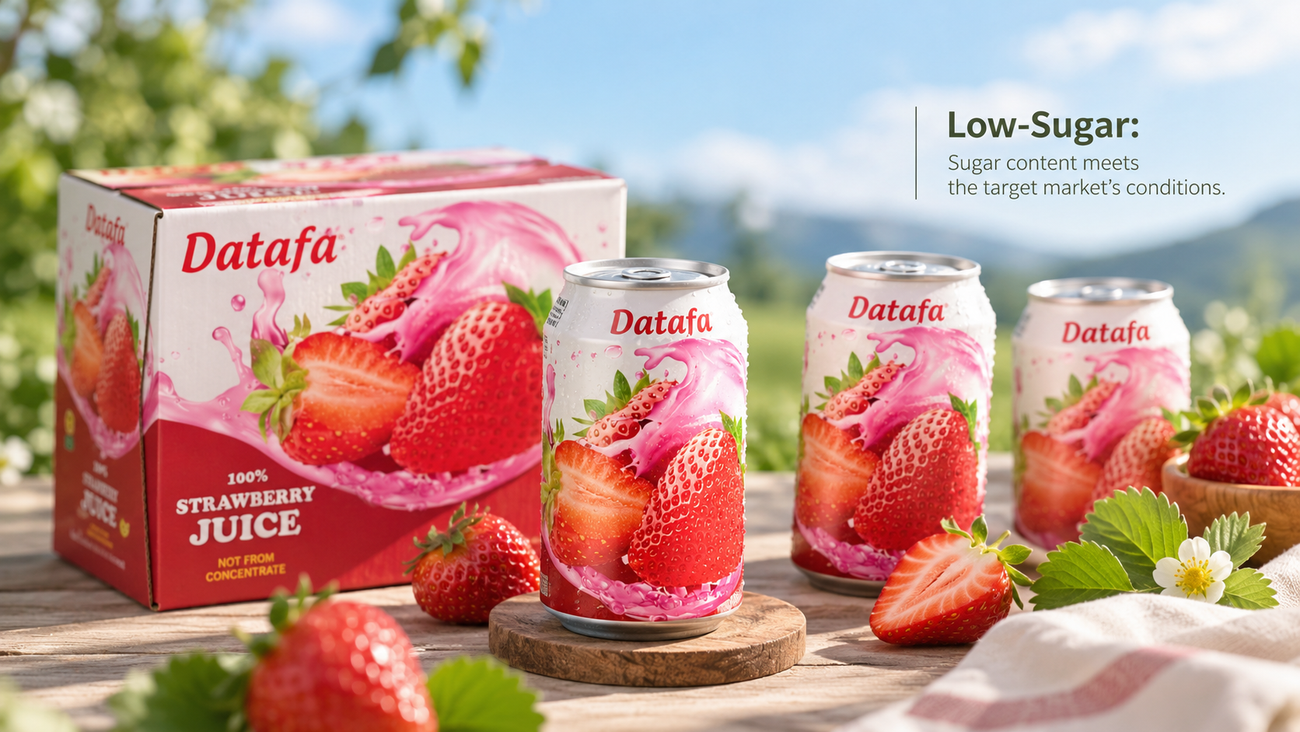
| Low-sugar | Does the drink meet a defined low-sugar condition in its target market? | Finished-product sugar content and local claim requirements |
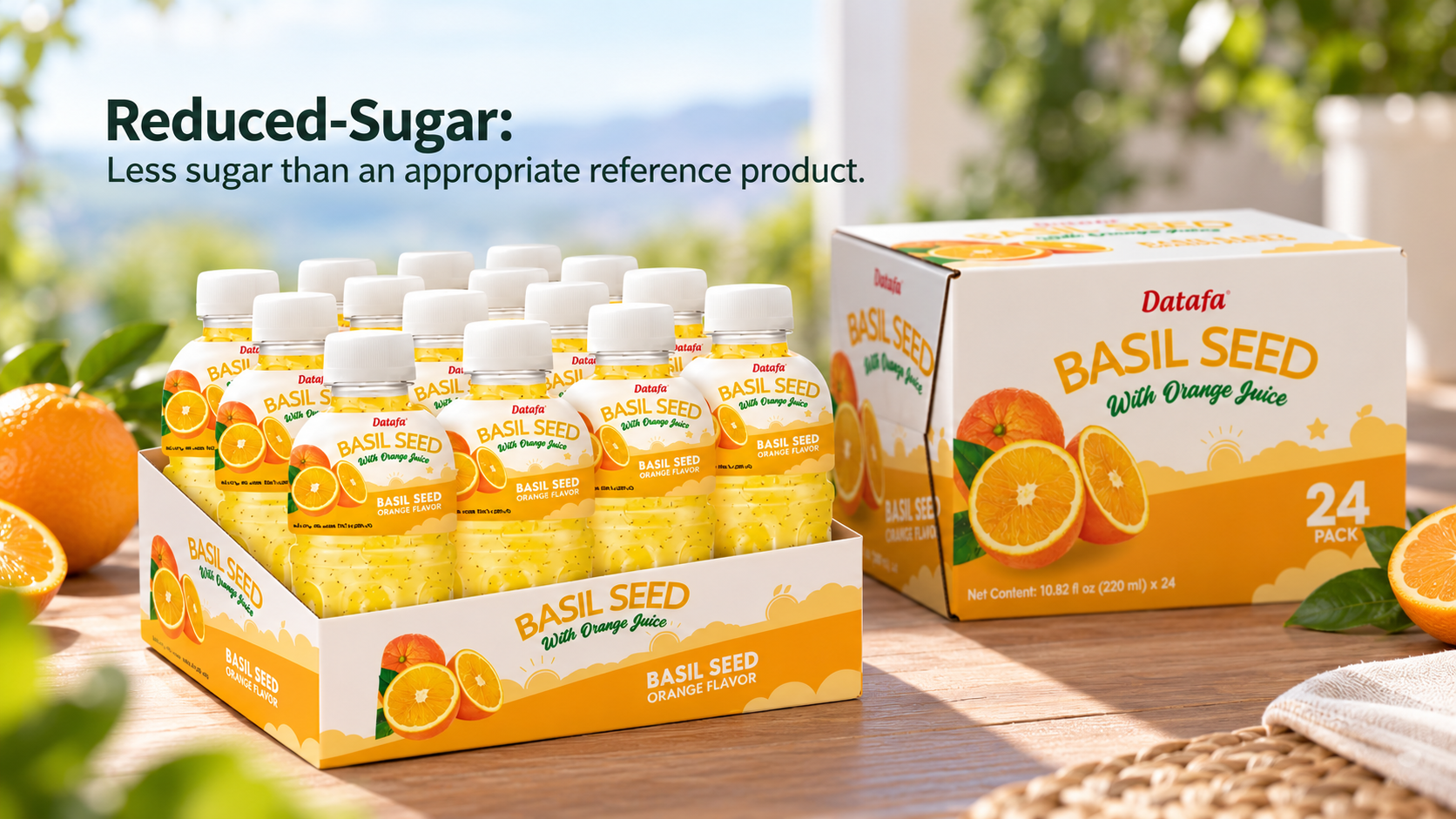
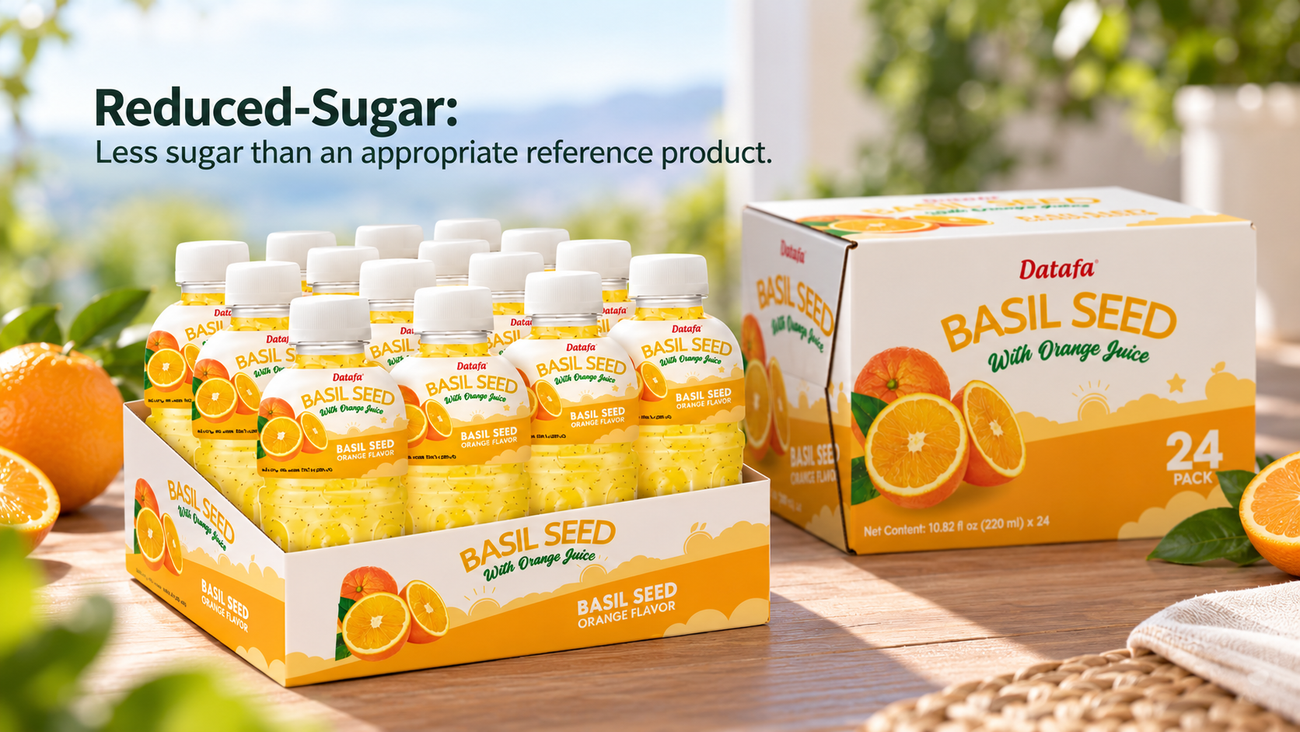
| Reduced-sugar | Does the drink contain less sugar than an appropriate comparison product? | Reference product, reduction level and required disclosures |
| No added sugar | Were sugars or ingredients used for sweetening added during production? | Full formulation and market-specific conditions |
| Sugar-free | Does the drink meet the applicable sugar-free threshold? | Finished-product sugar content and any additional label conditions |
A no-added-sugar fruit drink can still contain naturally occurring sugars. Likewise, reducing sugar compared with an original recipe does not automatically make the new drink eligible for a low-sugar claim.
Keeping these distinctions clear helps align the formulation, product specification and marketing message.
Why Low-Sugar Beverage Development Needs More Than a Sweetener Change
A simple instruction such as “replace sugar with another sweetener” leaves several product decisions unresolved.
The development team still needs to establish:
- The target sweetness level.
- The balance between sweetness and acidity.
- The desired body and mouthfeel.
- The flavor profile immediately after drinking and in the aftertaste.
- The finished product’s nutritional targets.
A beverage can meet its sugar target and still fall short of the expected taste. For this reason, sample evaluation should consider the full drinking experience alongside the nutrition results.
When comparing prototypes, brands should use the same serving temperature and preparation conditions. This makes feedback more consistent and helps the development team understand which changes are needed.
Fruit Content and Sweetener Selection Must Be Considered Together
Fruit-based beverages require particular attention because juice ingredients can contribute sugars to the finished formula.
A drink made with fruit juice and a non-sugar sweetener should still be assessed using its total finished-product sugar content. The presence of stevia, monk fruit or another sweetener does not, by itself, establish that the beverage is low in sugar.
Sweetener selection should follow the product brief. Useful questions include:
- Is the ingredient permitted for the intended application and market?
- Does its taste work with the chosen fruit or tea base?
- What wording and declarations will the label require?
- Does the formula meet the brand’s ingredient preferences?
- Can the proposed product achieve the target cost?
Brands should confirm ingredient suitability for each destination market before approving a shared export formula.
Packaging Changes the Amount of Sugar per Pack
Sugar concentration and sugar per pack are both useful when reviewing a beverage concept.
Consider a hypothetical drink containing 2 grams of sugar per 100ml:
| Pack size | Sugar per pack |
|---|---|
| 250ml | 5g |
| 330ml | 6.6g |
| 500ml | 10g |
These figures illustrate the calculation only; they are not DATAFA product specifications.
The concentration remains the same, but the amount consumed from a full pack changes. Brands should therefore review packaging size together with nutritional targets and expected consumption occasions.
A smaller pack reduces sugar per pack without changing the formula’s sugar concentration. Whether a product qualifies for a particular claim still depends on the relevant market rules.
Preparing a Low-Sugar Beverage Brief for DATAFA
A detailed brief gives DATAFA and the brand a shared basis for discussing an OEM/ODM project. It also helps identify which requirements are essential and which can be adjusted during development.
| Brief item | Information to provide |
|---|---|
| Target market | Countries and intended sales channels |
| Beverage concept | Fruit drink, tea, coconut-based drink or another proposed format |
| Target audience | Intended consumers and consumption occasions |
| Sugar target | Desired grams per 100ml and per pack |
| Taste direction | Flavor, sweetness, acidity and preferred reference samples |
| Ingredient preferences | Preferred or excluded sweeteners and other ingredients |
| Packaging | Preferred format and volume, subject to confirmation |
| Commercial target | Estimated order quantity, target cost and launch timing |
| Proposed claims | Wording to assess against the final formula and market requirements |
If the sugar target has not yet been decided, brands can begin with a reference product and explain what they want to change. For example, the brief might request a similar fruit profile with lower sugar and a less sweet finish.
This is more useful than asking for a drink that is simply “healthy” or “natural,” because it gives the development discussion measurable goals.
What Should Brands Confirm Before Production?
Before approving a low-sugar beverage for production, brands should bring the sample, specification and label information together for review.
Final Formula and Nutrition Information
Confirm that the approved formula matches the nutritional information used for the product. Review sugar content using clearly stated units, including per 100ml and per serving or pack where appropriate.
Product Performance
Agree on the relevant checks for the proposed beverage, processing method, packaging and shelf-life target. Any changes to the approved formula or packaging should be reviewed for their effect on the finished product.
Label and Marketing Wording
Review the product name, ingredient list, nutrition information and proposed claims for the intended sales market. The website, sales brochure and packaging should describe the same product consistently.
Commercial Requirements
Confirm the applicable minimum order quantity, sample process, packaging options, lead time and quotation with DATAFA. These details should be agreed for the specific project.
Frequently Asked Questions
Can a fruit beverage be developed with lower sugar?
A lower-sugar fruit beverage may be a development option, depending on the ingredients, juice content and product targets. The finished formula needs to be assessed to determine its actual sugar level and appropriate claims.
Does using a non-sugar sweetener make a drink sugar-free?
No. Other ingredients may still contribute sugars. The finished beverage must meet the applicable conditions before a sugar-free claim is used.
Can one formula and label be used in every export market?
This should not be assumed. Ingredient permissions, nutrition labeling and claim requirements need to be reviewed for each destination market.
What information should I send DATAFA first?
Start with your target market, beverage concept, preferred flavor, sugar target, packaging preference and estimated order quantity. Include reference products if available.
Discuss Your Low-Sugar Beverage Project with DATAFA
A clear brief helps turn a low-sugar beverage idea into a project that can be evaluated for taste, formulation and commercial fit.
Contact DATAFA to discuss your OEM/ODM requirements. Share your target market, flavor direction, desired sugar level and packaging preference, then confirm the available development options, sample process and project quotation.